
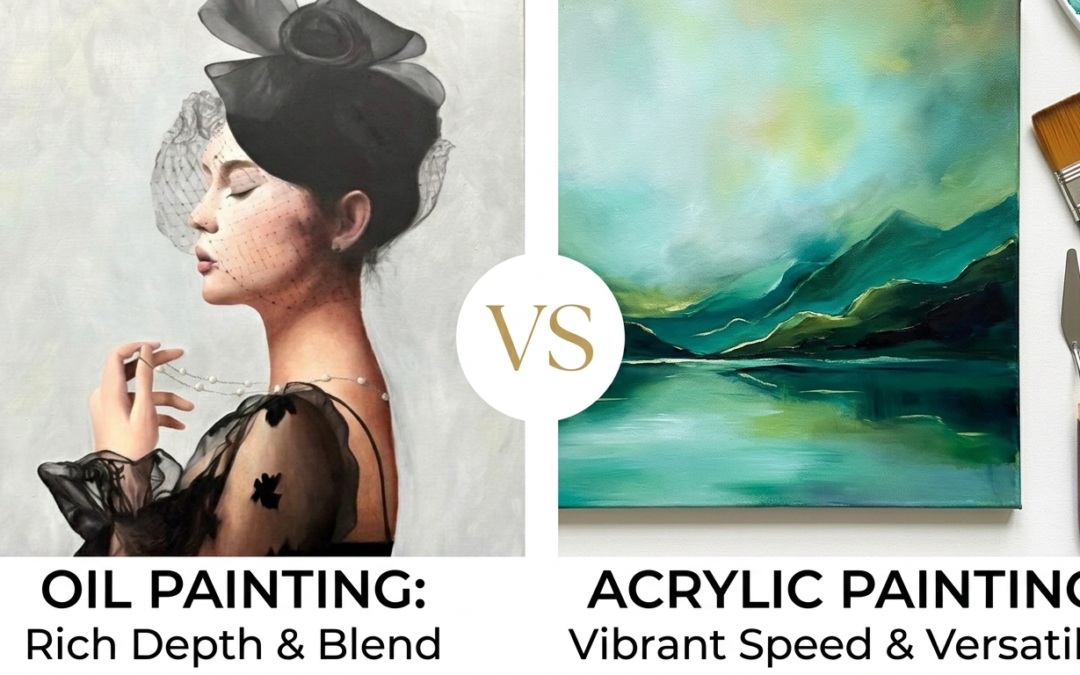
Oil vs acrylic paintings is one of the most common comparisons beginners make when starting their art journey. Oil painting is better for artists who want rich colors, smooth blending, and more time to work on details. Acrylic painting is better for those who want quick drying, easy cleanup, and faster results. The best choice depends on your style, skill level, and how you like to paint.
Contents
- 0.1 Introduction :Understanding Oil vs Acrylic Painting
- 0.2 What Is Oil Painting?
- 0.3 What Is Acrylic Painting?
- 0.4 Oil vs Acrylic Painting: Side-by-Side Comparison
- 0.5 Pros and Cons of Oil Painting
- 0.6 Pros and Cons of Acrylic Painting
- 0.7 Which Is Better for Beginners?
- 0.8 Which Medium Do Professional Artists Prefer?
- 0.9 When Should You Choose Oil Painting?
- 0.10 When Should You Choose Acrylic Painting?
- 0.11 Can You Use Both?
- 0.12 Common Mistakes Beginners Make
- 0.13 Tips to Improve Your Painting Skills
- 1 🎯 Advanced Guide: Oil vs Acrylic Painting – What Most Beginners Don’t Know (Continued)
- 1.1 🧠 How Oil vs Acrylic Painting Affects Your Learning Curve
- 1.2 🎨 Creative Freedom: Oil vs Acrylic Painting
- 1.3 ⏳ Time Investment: Oil vs Acrylic Painting
- 1.4 🧩 Skill Development: Oil vs Acrylic Painting
- 1.5 🖌️ Texture and Finish: Oil vs Acrylic Painting
- 1.6 💰 Budget Consideration: Oil vs Acrylic Painting
- 1.7 ⚠️ Hidden Challenges in Oil vs Acrylic Painting
- 1.8 🔄 Switching Between Oil vs Acrylic Painting
- 1.9 🌍 How Modern Artists Use Oil vs Acrylic Painting
- 1.10 🚀 Beginner Strategy: Oil vs Acrylic Painting
- 1.11 💡 Final Insight: Oil vs Acrylic Painting
- 1.12 Final Verdict:
- 1.13 FAQs (People Also Ask)
- 1.14 Conclusion
Introduction :Understanding Oil vs Acrylic Painting
Choosing between oil painting and acrylic painting can feel confusing, especially if you are just starting out. When exploring oil vs acrylic paintings, both are popular and both create beautiful art—but they work in very different ways.
Some artists love the slow, careful process of oils. Others enjoy the fast, flexible nature of acrylics. There is no one-size-fits-all answer.Oil vs acrylic painting is one of the most common comparisons beginners make when starting their art journey. Both mediums can create stunning artwork, but they behave very differently.
Oil painting is ideal for artists who want rich colors, smooth blending, and more time to work on details. Acrylic painting, on the other hand, is perfect for those who prefer quick drying, easy cleanup, and faster results.
The best choice depends on your style, skill level, and how you like to paint.
What Is Oil Painting?
Oil painting uses pigments mixed with oil, usually linseed oil. It has been used for centuries and is known for creating highly detailed and realistic artwork.
Famous masterpieces like the Mona Lisa were created using oil paints.
Key Features of Oil Paint
- Thick and creamy texture
- Slow drying time (days to weeks)
- Rich, deep colors
- Smooth blending and layering
What Is Acrylic Painting?
Acrylic paint is a modern, water-based medium made from pigment and polymer. It is widely used by beginners and contemporary artists.
Key Features of Acrylic Paint
- Fast drying (minutes to hours)
- Easy cleanup with water
- Can mimic oil or watercolor effects
- Flexible and beginner-friendly
Oil vs Acrylic Painting: Side-by-Side Comparison
Understanding oil and acrylic paintings helps you decide what suits your workflow best.
Drying Time
Oil Paint: Slow drying gives more time to blend.
Acrylic Paint: Dries quickly.
👉 In oil and acrylic paintings, this is one of the biggest differences.
Ease of Use
Oil Paint: Needs solvents and more setup.
Acrylic Paint: Easy cleanup with water.
👉 When comparing oil vs acrylic paintings, acrylic is easier for beginners.
Color Quality
Oil Paint: Rich and deep tones.
Acrylic Paint: Bright but may dry darker.
👉 In oil vs acrylic paintings, oil wins for color depth.
Blending Ability
Oil Paint: Smooth blending.
Acrylic Paint: Harder due to fast drying.
👉 This makes oil vs acrylic paintings an important choice for realism.
Pros and Cons of Oil Painting
Advantages
- Smooth blending
- Rich textures
- Professional finish
- Long working time
Disadvantages
- Slow drying
- Requires chemicals
- Expensive
- Strong smell
Pros and Cons of Acrylic Painting
Advantages
- Fast drying
- Easy cleanup
- Affordable
- Great for beginners
Disadvantages
- Hard to blend
- Colors may change when dry
- Less depth than oil
Which Is Better for Beginners?
When comparing oil vs acrylic painting, acrylic is usually the better choice for beginners.
Why Acrylic Is Better for Beginners
- Easy to use
- Quick results
- Mistakes are easier to fix
- No need for solvents
- Lower cost
However, oil painting can still be a good option if you enjoy patience and detailed work.
Which Medium Do Professional Artists Prefer?
Many professional artists use both mediums depending on their needs.
- Oil painting is preferred for realism and detailed work
- Acrylic painting is popular for modern and abstract styles
Some notable contemporary artists from Chennai include:
- Pitureart by Shruthi Challani
- Ganesh Selvaraj
- A. V. Ilango
- Palaniappan
- Parvathi Nayar
- C. Douglas
- K. Muralidharan
Studying their work can help you understand how both mediums are used effectively.
When Should You Choose Oil Painting?
Choose oil painting if:
- You enjoy realistic art
- You prefer slow and detailed work
- You want smooth blending
- You don’t mind waiting for drying
Oil painting is ideal for portraits, landscapes, and fine art.
When Should You Choose Acrylic Painting?
Choose acrylic painting if:
- You want fast results
- You like experimenting
- You are a beginner
- You prefer easy cleanup
Acrylic is great for abstract art, modern styles, and mixed media.
Can You Use Both?
Yes, many artists use both oil and acrylic paints.
You can even combine them:
- Use acrylic for base layers
- Add oil details on top (with proper preparation)
This gives you flexibility and creative freedom.
Common Mistakes Beginners Make
With Oil Painting
- Using too much paint
- Not waiting between layers
- Ignoring ventilation
With Acrylic Painting
- Working too slowly
- Not keeping paints wet
- Over-layering too quickly
Tips to Improve Your Painting Skills
- Practice regularly
- Study light and shadow
- Use reference images
- Experiment with both mediums
- Learn from experienced artists
🎯 Advanced Guide: Oil vs Acrylic Painting – What Most Beginners Don’t Know (Continued)
Understanding oil vs acrylic painting is not just about choosing between two types of paint—it’s about understanding how each medium affects your workflow, creativity, and final result.
Most beginners focus only on drying time and ease of use, but there are deeper differences that directly impact your growth as an artist.
🧠 How Oil vs Acrylic Painting Affects Your Learning Curve
One of the biggest differences in oil vs acrylic painting is how quickly you learn and adapt.
With Acrylic Painting:
- You learn faster because of quick results
- You can complete multiple paintings in a short time
- You get immediate feedback on your work
With Oil Painting:
- You learn patience and control
- You spend more time refining details
- You develop a deeper understanding of blending and layering
👉 This means:
Acrylic = faster learning
Oil = deeper learning
🎨 Creative Freedom: Oil vs Acrylic Painting
When comparing oil vs acrylic painting, creative freedom plays a huge role.
Oil Painting
- Allows smooth transitions
- Ideal for realism and portraits
- Great for emotional depth
Acrylic Painting
- Supports bold, experimental styles
- Works well for abstract art
- Allows quick layering and texture
👉 If you like structured, detailed work → Oil
👉 If you like freedom and experimentation → Acrylic
⏳ Time Investment: Oil vs Acrylic Painting
Time is a major factor in oil vs acrylic painting.
Oil Painting
- Takes days or weeks to finish
- Requires drying time between layers
- Encourages slow, thoughtful work
Acrylic Painting
- Can be completed in hours
- No waiting time
- Perfect for quick practice sessions
👉 If you are busy or just starting → Acrylic is better
👉 If you enjoy long creative sessions → Oil is ideal
🧩 Skill Development: Oil vs Acrylic Painting
The choice between oil vs acrylic painting also affects how your skills develop.
Oil Painting Helps You:
- Master blending
- Understand color transitions
- Improve patience
Acrylic Painting Helps You:
- Build speed
- Improve confidence
- Practice frequently
👉 The best artists often explore oil vs acrylic painting to develop a complete skill set.
🖌️ Texture and Finish: Oil vs Acrylic Painting
Another key difference in oil vs acrylic painting is the final look of your artwork.
Oil Painting Finish
- Smooth and rich
- Slight shine
- Professional and classic look
Acrylic Painting Finish
- Matte or semi-gloss
- Can be flat or textured
- Modern and versatile
👉 Oil = classic fine art
👉 Acrylic = modern and flexible
💰 Budget Consideration: Oil vs Acrylic Painting
For beginners, budget matters when choosing oil vs acrylic painting.
Oil Painting Costs
- Expensive paints
- Requires solvents and mediums
- More maintenance
Acrylic Painting Costs
- Affordable paints
- Minimal tools needed
- Easy cleanup
👉 Acrylic is the better choice if you are starting with a limited budget.
⚠️ Hidden Challenges in Oil vs Acrylic Painting
Many blogs don’t talk about these—but they matter when comparing oil vs acrylic painting.
Oil Painting Challenges
- Strong smell (from solvents)
- Requires proper ventilation
- Longer waiting time
Acrylic Painting Challenges
- Paint dries too fast
- Hard to fix blending mistakes
- Can feel less forgiving
👉 Understanding these challenges helps you choose smarter.
🔄 Switching Between Oil vs Acrylic Painting
Many artists don’t stick to just one medium.
In fact, learning both oil vs acrylic painting can improve your overall skills.
Smart Approach:
- Start with acrylic → build basics
- Move to oil → improve depth and realism
You can also:
- Use acrylic for base layers
- Add oil details on top (with proper preparation)
👉 This hybrid method is used by many professionals.
🌍 How Modern Artists Use Oil vs Acrylic Painting
Today’s artists don’t limit themselves when it comes to oil vs acrylic painting.
Many contemporary artists:
- Use acrylic for speed and experimentation
- Use oil for gallery-level work
In cities like Chennai, artists combine both mediums to create unique styles and reach wider audiences.
👉 This shows that oil vs acrylic painting is not about choosing one—it’s about using both effectively.
🚀 Beginner Strategy: Oil vs Acrylic Painting
If you are just starting, follow this simple plan for learning oil vs acrylic painting:
Week 1–2:
- Use acrylic paints
- Practice shapes and colors
Week 3–4:
- Try simple compositions
- Focus on light and shadow
Month 2:
- Experiment with oil painting
- Learn blending techniques
👉 This gradual approach makes learning easier and more effective.
💡 Final Insight: Oil vs Acrylic Painting
The debate around oil vs acrylic painting is not about which is better.
It’s about:
- Your personality
- Your patience level
- Your creative goals
👉 Choose oil painting for depth and detail
👉 Choose acrylic painting for speed and flexibility
But the smartest choice?
👉 Try both and let your style decide.
Final Verdict:
There is no single “better” option.
- Choose oil painting for depth, richness, and detail
- Choose acrylic painting for speed, ease, and flexibility
The best medium is the one that fits your style and comfort.
FAQs (People Also Ask)
Is oil painting harder than acrylic?
Yes, oil painting can be harder because it requires more patience and understanding of materials.
Do professional artists use acrylic?
Yes, many modern artists prefer acrylic for its versatility and speed.
Which paint lasts longer?
Oil paintings can last for centuries if properly preserved.
Can beginners start with oil painting?
Yes, but acrylic is usually easier to begin with.
Can acrylic look like oil painting?
Yes, with the right techniques, acrylic can mimic oil effects.
Conclusion
Oil and acrylic painting both have their strengths. One is not better than the other in every situation.
If you want slow, detailed, and rich artwork, choose oil.
If you want fast, flexible, and easy painting, choose acrylic.
Explore both, practice regularly, and learn from experienced artists.
👉 That’s how you discover your unique artistic style.